


Ho Chi Minh City People’s Committee has just released a report on the implementation of Politburo Resolution No. 57-NQ/TW and Government Resolution No. 71/NQ-CP.
According to the report, the committee said that during the 2025–2026 period, the city will continue to thoroughly uphold the viewpoints, objectives and requirements set out in Politburo Resolution No. 57-NQ/TW and Government Resolution No. 71/NQ-CP.
It identifies science and technology, innovation and digital transformation as among the most critical drivers for creating breakthroughs in the city’s socio-economic development.
The city has issued a Governance Framework for key tasks in late 2025, throughout 2026 and towards 2030 on the development of science and technology, innovation and digital transformation.
Notably, Ho Chi Minh City will also promote low-altitude economic development. This includes establishing controlled experimental zones for testing technology solutions and unmanned aerial vehicle (UAV) management systems, focusing on core task groups.
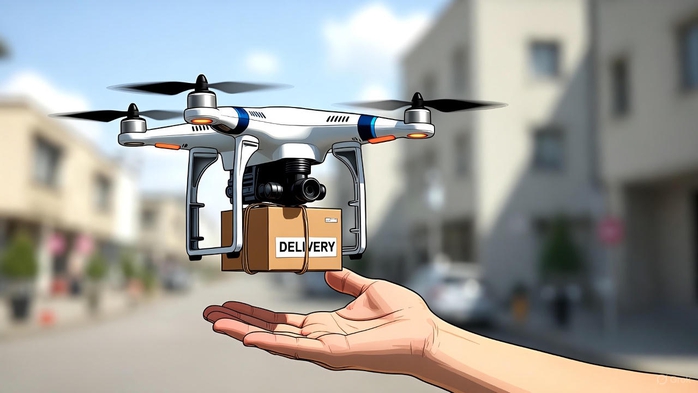
Ho Chi Minh City will pilot application-based services that utilize unmanned aerial vehicles for smart agriculture, urban security and order monitoring, as well as transport and delivery operations. (AI-generated illustrative image)
Accordingly, the city will set up controlled UAV testing areas based on simplified flight management and licensing procedures.
It will also promote research and development (R&D), design and manufacturing of UAV to master foundational and core technologies (hardware, software, facilities and management infrastructure).
Pilot services involving UAV applications will be carried out in areas such as smart agriculture; urban and public security monitoring; transport and delivery; emergency response, search and rescue; and passenger transport.
The city will also establish and pilot a system for managing and coordinating UAV.
The Ho Chi Minh City People’s Committee will also roll out several key solutions to implement the city’s digital economy development program for the 2026–2030 period.
Specifically, it will introduce controlled sandbox mechanisms, develop strategic infrastructure and establish data exchange platforms.
The city will introduce support policies for priority sectors, including semiconductor manufacturing and AI data centers. It will also collaborate with and assist businesses in advancing “Dual Transformation” - digitalization and the green transition - while strengthening international cooperation to build a solid foundation for digital economic growth.



 và quét mã QR
Bạn không thể gửi bình luận liên tục. Xin hãy đợi
60 giây nữa.